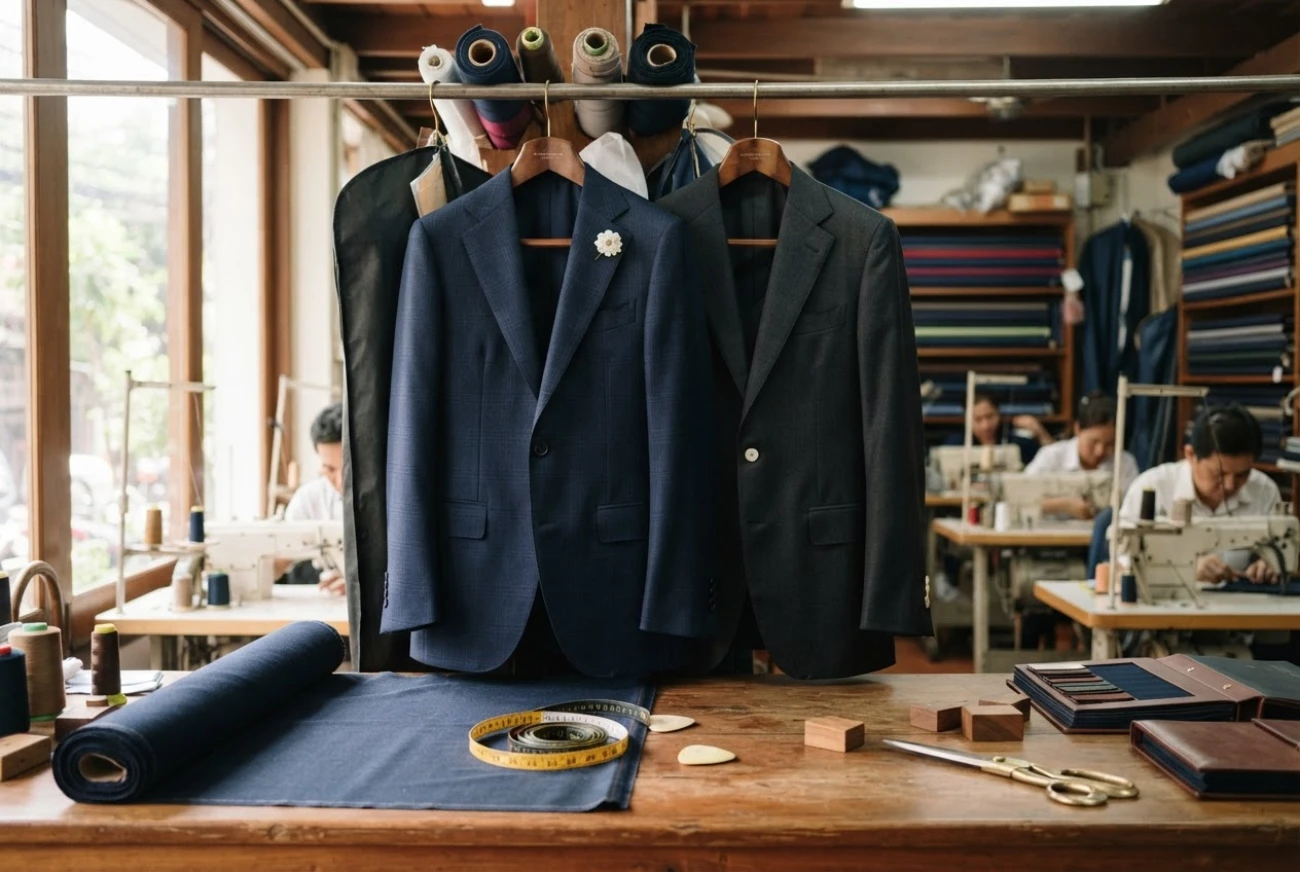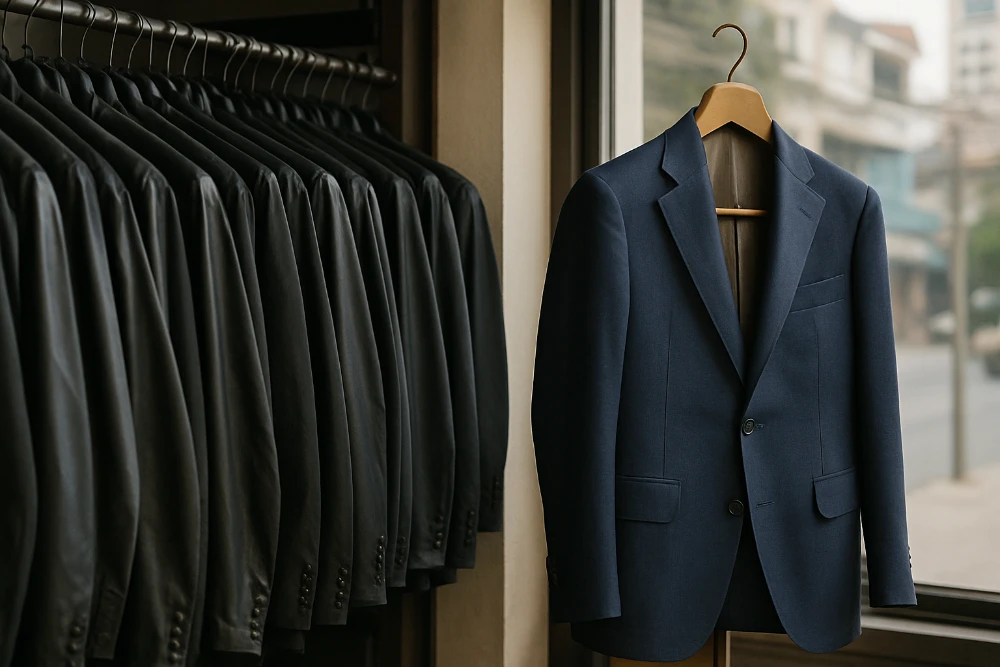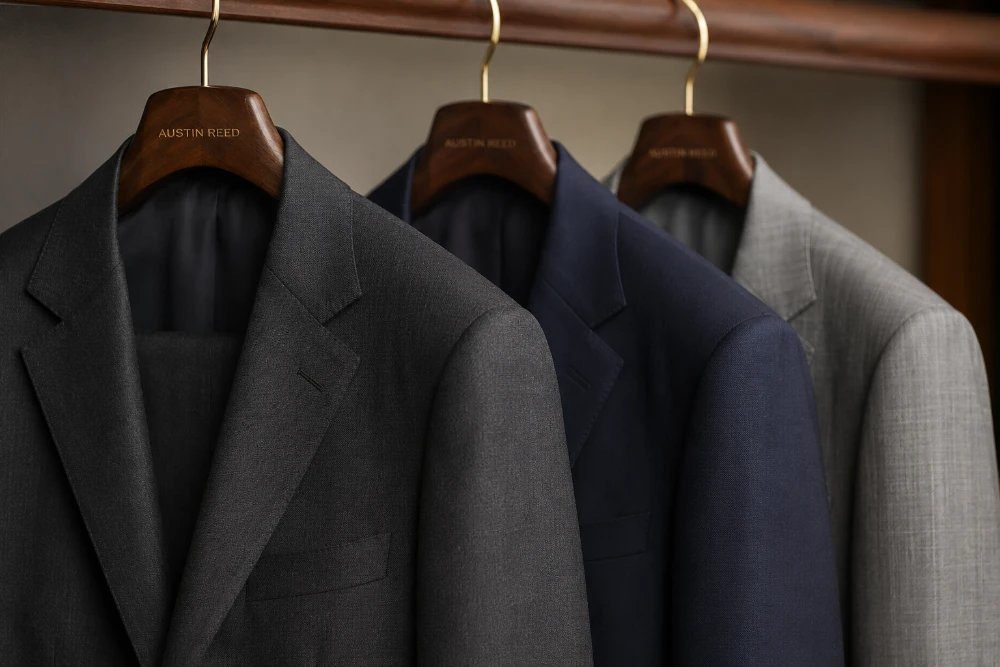


A tailored suit is only as good as its fit. A tailored suit in beautiful cloth still looks cheap if the shoulders are wrong, and a modest cloth looks sharp when the fit is right. Fit is the whole game, and most of it is decided by seven details you can learn to judge in a couple of minutes, whether you are checking your own suit or a tailor’s finished work.
Here are the seven fit details that make or break a tailored suit, and what “correct” actually looks like on the body.
The short version
The shoulders are the one detail a tailor cannot truly fix later, so they matter most; the rest — chest, jacket length, sleeves, collar, trouser break, and waist — should be dialed in across a fitting. Get the shoulders and chest right and everything else is refinement. Get them wrong and no amount of pressing rescues the suit.
Why fit beats fabric and brand
People fixate on cloth and labels, but fit is what the eye reads first. A tailored suit is built to follow your body, which is exactly what off-the-rack cannot do because it is cut to a statistical average. That overview of the suit covers the anatomy; the checkpoints below tell you whether a given garment actually fits.
7 details that make or break a tailored suit
1. The shoulders (the one that cannot be fixed)
The shoulder seam should end exactly where your shoulder ends, at the bone, before the arm drops. If it extends past your shoulder or the fabric divots and ripples near it, the jacket does not fit, and this is the one area alterations cannot rescue. On a real tailored suit the shoulder is built to your frame from the start.
2. The chest and the button
Button the jacket and you should be able to slip a flat hand under the lapel with light tension, no more. Too tight and the button pulls into an “X” of wrinkles; too loose and the jacket billows. The chest is where a tailored suit accommodates your build instead of forcing you into a size.
3. Jacket length
A classic-length jacket ends around the middle of your hand when your arms hang, and roughly covers your seat. Too short cuts your proportions; too long shortens your legs. This is a balance decision a good tailor sets to your height.
4. Sleeve length
The jacket sleeve should end at the wrist bone and reveal about a quarter to half an inch of shirt cuff. That sliver of cuff is a quiet signal that a suit was actually fitted. Sleeve length is easy to adjust, so there is no excuse for it being wrong on a tailored suit.
5. The collar
The jacket collar should sit flush against your shirt collar and the back of your neck, with no gap and no fold of fabric below it. A collar gap usually points to a balance problem, common off-the-rack and designed out in proper tailoring.
6. Trouser break
The “break” is how the trouser hem meets the shoe. A medium break, one soft dimple, is the modern standard; no break is sharper; a full break is traditional. There is no single right answer, but the hem should never pool in heavy folds at the ankle.
7. Trouser waist and seat
Trousers should sit at your natural waist and stay up without cinching a belt tight, and the seat should follow your shape with no sagging or horizontal pull lines. This is a frequent off-the-rack failure and a routine success on a tailored suit built to your measurements.
Off-the-rack vs a tailored suit
Off-the-rack gets the shoulders wrong, fits the chest or the waist but rarely both, and ignores posture entirely. A tailored suit is measured to your shoulder point, accommodates chest and waist at once, and accounts for how you actually stand. Alterations can move a waist or a hem, but they cannot rebalance a jacket or relocate a shoulder, which is why starting from your own measurements matters. For the deeper comparison, see bespoke vs made-to-measure vs off-the-rack.
Getting the fit right in Bangkok
The good news is that a properly fitted tailored suit is affordable in Bangkok, so there is no reason to settle for approximate. The key is a tailor who measures thoroughly and fits you across more than one visit rather than running up a near-stock pattern overnight.
At Galaxy Tailor, every tailored suit is cut from your own measurements and fitted in our Sukhumvit workshop until the seven details above are right. Explore our men’s tailoring and women’s tailoring, then book a fitting to feel the difference a real fit makes.
Frequently asked questions
What is the most important part of a tailored suit’s fit?
The shoulders. Every other detail on a tailored suit can be altered, but the shoulder essentially cannot, so it is where fit is won or lost.
Can a tailor fix a badly fitting off-the-rack suit?
Waist, sleeve, and hem, yes. Shoulders and overall balance, mostly no. That limit is why a suit built to your measurements is worth it.
How much shirt cuff should show below a suit sleeve?
About a quarter to half an inch. It is a small detail that signals a properly fitted tailored suit.
How many fittings does a tailored suit need?
Usually a measurement session and one or two fittings, so the tailor can correct the fit on your body. A single rushed fitting produces only an approximate result.