
Bangkok is one of the world’s top destinations for bespoke tailoring, and for good reason. Skilled craftsmanship, premium fabrics, and prices that are a fraction of what you would pay in London or New York make the city a magnet for first-time suit buyers and seasoned collectors alike.
But if you have never had a suit custom made before, the process can feel intimidating. How long does it take? What happens during a fitting? How do you pick the right fabric when there are thousands to choose from?
This guide walks you through every step of getting a suit made in Bangkok, from the moment you walk through the door to the moment you walk out in a garment that fits like nothing off the rack ever could.
Step 1: Choosing the Right Tailor
Bangkok has hundreds of tailor shops, and the quality varies enormously. Before you commit, do your homework. Look for tailors with consistent Google reviews (not just a handful of five-star ratings), a physical showroom you can visit, and clear photos of finished garments on real customers.
A few things that separate a reputable tailor from a tourist trap:
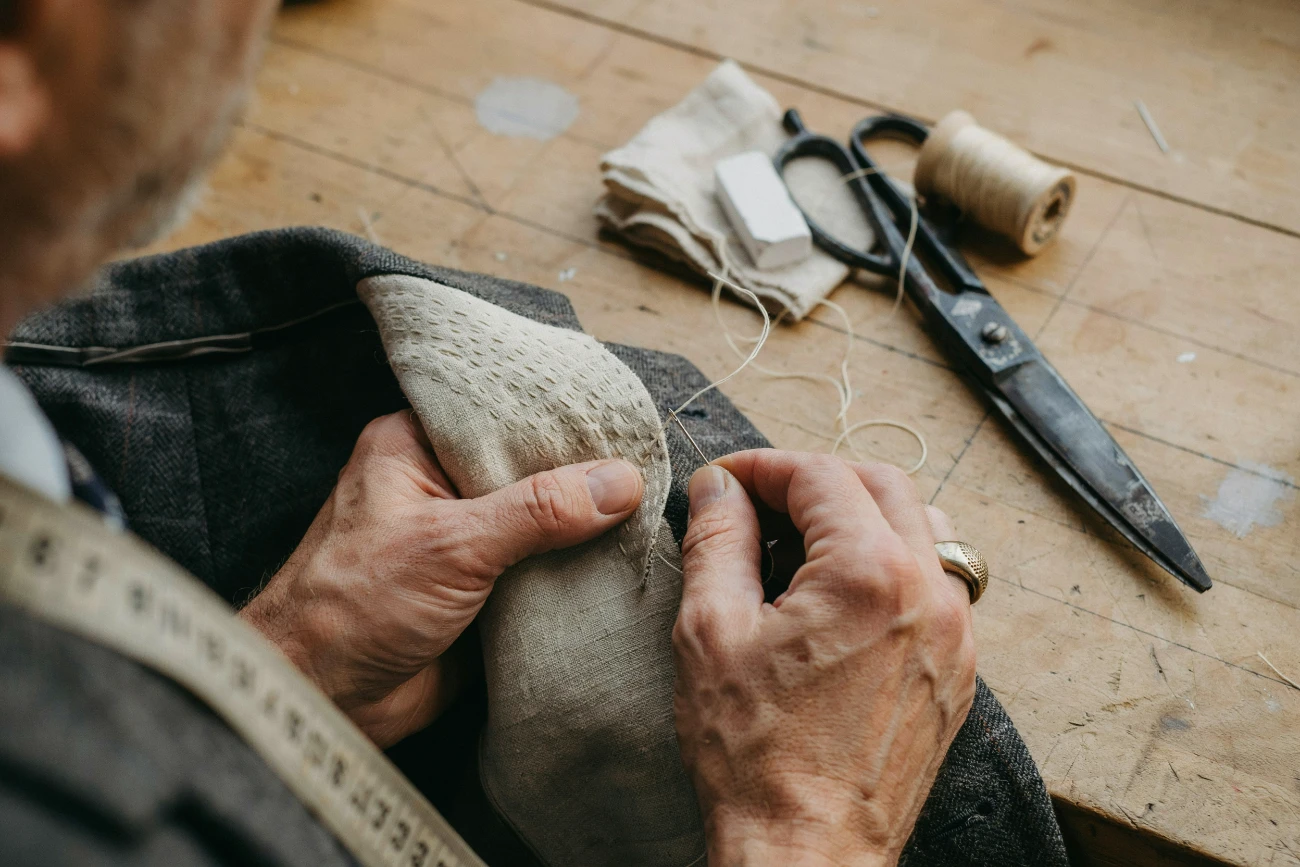
- In-house production. The best tailors cut and sew on-site rather than outsourcing to external factories. This gives them direct control over quality and allows for faster adjustments. At Galaxy Tailor, every garment is produced in our own workshop by master tailors with over 25 years of experience.
- No high-pressure sales on the street. Touts standing outside a shop pulling you in is a red flag. Quality tailors rely on reputation and referrals, not aggressive sidewalk pitching.
- Willingness to explain the process. A good tailor will walk you through every decision rather than rushing you to pick a fabric and pay.
- A wide fabric library. Shops with a limited selection often work with lower-grade materials. A serious tailor stocks thousands of options from reputable mills.
Read our detailed post on how to find the perfect tailor near you in Bangkok for more on what to look for and what to avoid.
Step 2: The Initial Consultation
Your first visit to a Bangkok tailor is a conversation, not a sales pitch. A skilled tailor wants to understand three things before anything else: your lifestyle, your style preferences, and the occasion you are dressing for.
What You Will Be Asked
Expect questions like: What do you do for work? Will you wear this suit in a tropical climate or back home in a colder country? Is this for a wedding, for business, or for everyday wear? Do you prefer a slim modern cut or something more classic and relaxed?
There are no wrong answers. The point is to make sure your finished suit actually fits your life, not just your body. A suit designed for Bangkok boardrooms will use different fabric and construction than one built for a winter wedding in Europe.
What to Bring
If you have a suit you already love the fit of, bring it along. It gives the tailor a concrete reference point. Photos from magazines or your phone are also helpful. Even if you cannot articulate exactly what you want in tailoring terms, a visual reference makes communication much easier.
Wear or bring the shoes you plan to pair with the suit. Heel height affects trouser length, and getting this right from the start saves time during fittings.
Step 3: Fabric Selection
This is the part that overwhelms most first-timers. A well-stocked tailor shop will have thousands of fabric swatches, and they can all start to look the same after a while. Here is how to navigate it without decision fatigue.
Start with Purpose, Not Pattern
Before you look at a single swatch, decide what the suit needs to do. A business suit calls for solid navy or charcoal in a medium-weight wool. A summer wedding suit might call for lighter shades in linen or a tropical-weight blend. Once you narrow the purpose, the options become far more manageable.
Fabric Weight and Climate
Bangkok tailors work with clients from all over the world, so they carry fabrics for every climate. If you live in a hot country or plan to wear the suit in Bangkok, ask for high-twist wool, fresco weave, or linen blends that breathe well. If the suit is going home with you to a cooler climate, heavier wools and flannels are available too.
Our fabric library includes over 10,000 options from premium European mills including Drago, Dormeuil, Loro Piana, Vitale Barberis Canonico, and Holland and Sherry. Your tailor will guide you toward the right weight and weave based on where and how you plan to wear the suit.
Understanding Quality Grades
You will hear terms like “Super 110s” or “Super 150s.” This refers to the fineness of the wool fiber. Higher numbers mean finer, softer fabric, but also more delicate. For a first suit that needs to be durable and versatile, Super 110s or Super 120s is the sweet spot. It feels luxurious, holds its shape well, and resists wrinkling better than ultra-fine grades.
Step 4: Design Details and Customization
Once you have chosen your fabric, you will make a series of design decisions that shape the look and feel of the finished suit. A good tailor will guide you through each one and recommend what works best for your body type and style.
Key Decisions You Will Make
Lapel style: Notch lapels are the most versatile and common for business suits. Peak lapels are bolder and more formal, often seen on double-breasted jackets and wedding suits. A skilled tailor will recommend the right width and style based on your build.
Button configuration: Two-button single-breasted is the modern standard. Three-button is more traditional. Double-breasted suits are making a strong comeback for those who want a more distinctive look.
Vents: A single center vent is the most common. Double side vents offer better movement and a cleaner look when you put your hands in your pockets. No vent gives the cleanest back line but limits mobility.
Trouser style: Flat-front or pleated, cuffed or uncuffed, slim-tapered or straight. Your tailor will recommend proportions based on the jacket silhouette and your body shape.
Lining: Full lining, half lining, or unlined. In tropical climates, half-lined or unlined construction keeps you cooler. For colder weather, full lining adds warmth and helps the jacket drape smoothly.
Personal touches: Monogramming on the inside lining, custom button choices (horn, mother of pearl, metal), contrast stitching on buttonholes, and personalized lining fabric. These details are what make a bespoke suit truly yours.
Step 5: Measurements
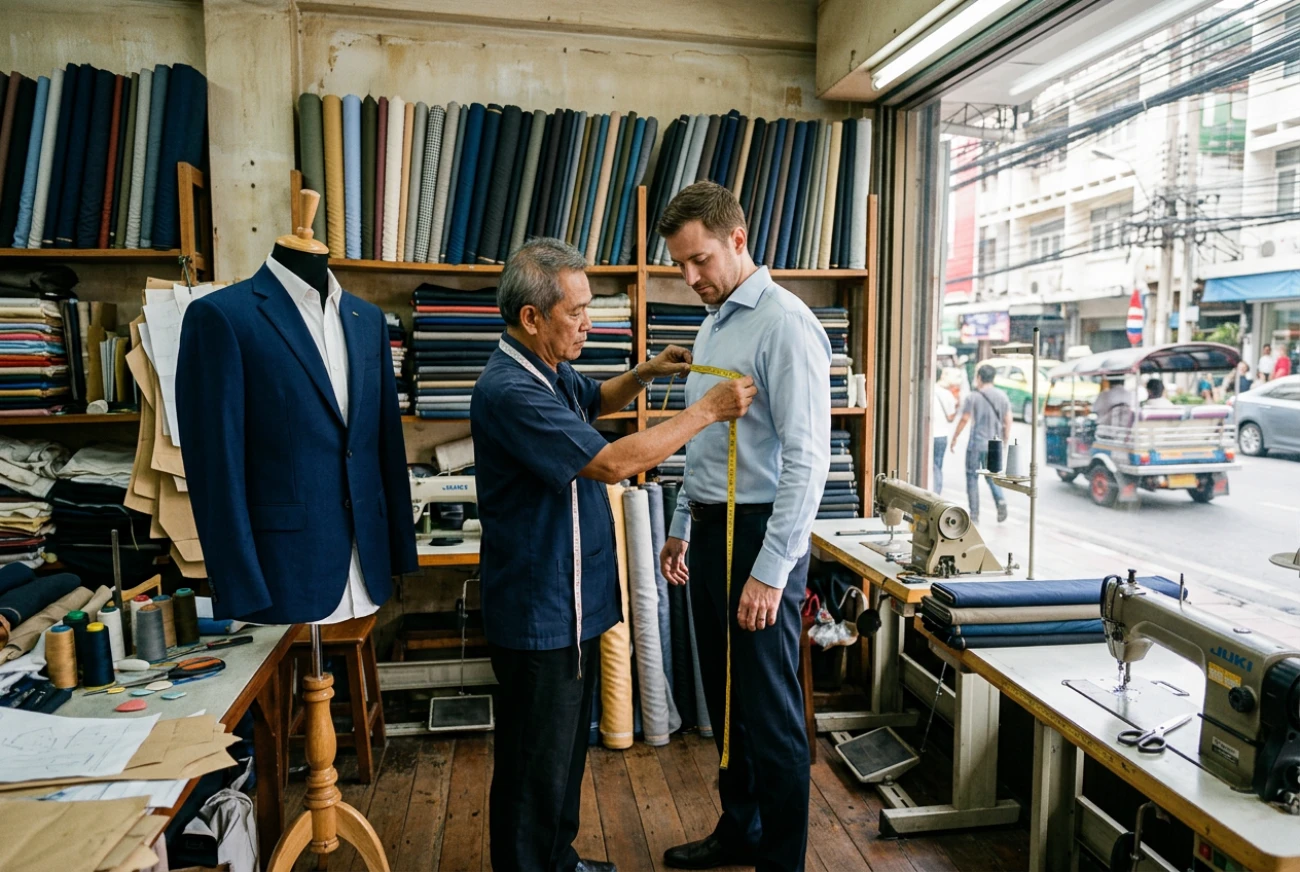
This is where the magic of bespoke tailoring really begins. Unlike off-the-rack suits that come in standard sizes, a custom suit is built around your exact body. A master tailor typically takes 20 to 30 individual measurements, covering far more than just chest, waist, and inseam.
What Gets Measured
Beyond the obvious dimensions, an experienced tailor will note your posture, shoulder slope (most people have one shoulder slightly lower than the other), any asymmetry in your build, and the way you naturally stand and move. These subtle observations are what separate a truly great fit from a merely good one.
The measurement process takes about 15 to 20 minutes. You should stand naturally and relaxed. Do not puff your chest out or suck in your stomach. The suit needs to fit the real you, not the version of you that is trying to look good for five seconds.
At Galaxy Tailor, we keep your measurement records on file permanently. This means every future order benefits from your established fit profile. No need to start from scratch each time, even if you order remotely from overseas.
Step 6: Fittings
Fittings are the most important part of the bespoke process, and the number of fittings you can attend will depend on how long you are staying in Bangkok.
The First Fitting
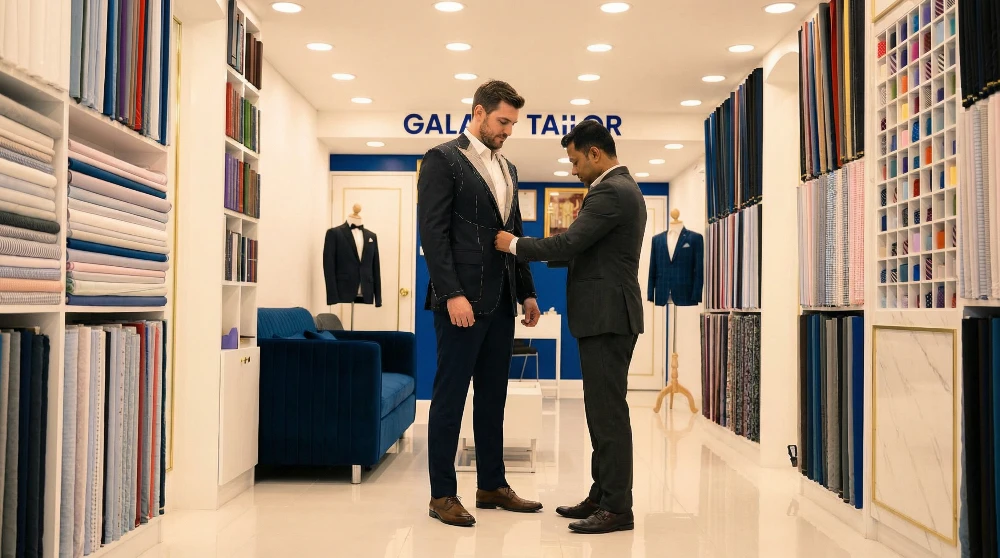
This happens 2 to 4 days after your initial visit, depending on the tailor’s workload. You will try on a partially constructed version of the suit (called a “basted” fitting at high-end tailors, or a nearly finished garment at most Bangkok shops). The purpose is to check the foundational fit: shoulders, chest, back, and the overall silhouette.
At this stage, the tailor will pin and mark adjustments. Do not be alarmed if the suit does not look perfect yet. That is the entire point of a fitting. Speak up about anything that feels tight, loose, or pulls in the wrong direction. A good tailor wants your honest feedback.
The Second Fitting
By the second fitting, the suit is close to finished. Fine adjustments are made: sleeve length, trouser break, collar roll, and any remaining fit issues. For most visitors to Bangkok, two fittings produce an excellent result.
Final Collection
If your schedule allows a third visit, you will try on the completed suit for a final check. Minor tweaks (a buttonhole, a slight trouser adjustment) can often be done on the spot within an hour or two.
Step 7: Timeline and Turnaround
One of the most common questions first-time visitors ask is: “How long does it take?” Here is a realistic breakdown.
Standard Timeline
For a single suit with two fittings, plan for 5 to 7 days from initial consultation to final collection. This gives the tailors enough time to cut, construct, fit, adjust, and finish the garment properly without rushing.
Express Timeline
If you are in Bangkok for only 3 to 4 days, most reputable tailors can accommodate a faster turnaround with one fitting. The result will still be very good, especially if you communicate clearly during the consultation and measurements stage. Let your tailor know your departure date upfront so they can plan the workflow accordingly.
What If You Cannot Return for a Fitting?
Some tailors offer international shipping for clients who cannot collect in person. If your trip is extremely short, you can complete the consultation, measurements, and fabric selection in one visit, do a single fitting before you leave, and have the finished suit shipped to your home address after final adjustments.
For tips on planning your timeline, read our guide on getting a wedding suit made in Bangkok, which includes detailed scheduling advice.
Step 8: Payment and Pricing
Pricing for a custom suit in Bangkok varies widely depending on the fabric quality, construction method, and the tailor’s reputation. As a rough guide:
- Entry-level custom suits (basic fabric, simpler construction): 7,000 to 12,000 THB
- Mid-range bespoke suits (quality European fabric, full construction): 15,000 to 30,000 THB
- Premium bespoke suits (top-tier mill fabric, handwork details): 30,000 THB and above
Most Bangkok tailors require a deposit at the time of ordering (typically 50%) with the balance due at collection. Credit cards are widely accepted. Always confirm the total price, what is included (such as alterations after collection), and the payment terms before you commit.
Remember: the cheapest option is rarely the best value. A well-made suit in quality fabric will last years and hold its shape through hundreds of wears. A cheap suit made from inferior fabric will look tired after a few months. Think of it as a cost-per-wear investment.
Step 9: After Collection
Once you have your finished suit, a few things to keep in mind:
Suit Care Basics
Do not dry clean your suit after every wear. Excessive dry cleaning strips the natural oils from wool and shortens the fabric’s life. Instead, brush your suit after wearing it, hang it on a proper wooden hanger, and let it air out for 24 hours before wearing it again. Dry clean only when necessary, perhaps two to three times per year for a suit worn regularly.
We cover this in much more detail in our bespoke suit care guide.
Reordering From Home
One of the biggest advantages of building a relationship with a Bangkok tailor is the ability to reorder remotely. Once your measurements are on file, you can order additional suits, custom shirts, or trousers by email or phone and have them shipped to you anywhere in the world. Many of our long-term clients have not visited the shop in years but continue to order new pieces each season.
Common First-Timer Mistakes to Avoid
Going Too Trendy
Your first bespoke suit should be versatile. Stick to classic colors (navy, charcoal, mid-grey) and a clean modern cut. Avoid extreme slim fits, unusual colors, or bold patterns for your first suit. You can experiment later once you know how bespoke suits work for your body.
Rushing the Process
Do not try to get a suit made in 24 hours. Some shops advertise overnight turnarounds, but quality tailoring takes time. A 48-hour suit will almost always compromise on fit, finishing, or both. If your schedule is tight, one suit done well is better than three suits done poorly.
Not Speaking Up During Fittings
The fitting is your chance to shape the final product. If something feels off, say so. A professional tailor will never be offended by feedback. They want the suit to be right just as much as you do.
Ignoring the Shirt
A bespoke suit looks its best when paired with a well-fitted shirt. Consider adding two or three custom shirts to your order. The price difference between a custom shirt and a decent off-the-rack shirt is small, but the fit difference is enormous.
Ready to Get Started?
Getting your first suit made in Bangkok is one of those travel experiences that stays with you long after you leave. It is practical, personal, and genuinely enjoyable when you work with the right tailor.
At Galaxy Tailor, we have been guiding first-time clients through this process since 1999. Our team speaks fluent English, our workshop is on-site, and we are located at 52 Sukhumvit Soi 18, a 5-minute walk from BTS Asoke and MRT Sukhumvit stations.
Book your consultation today and experience what a suit made just for you actually feels like.